
Whoa! I first saw a smart card wallet at a conference and my gut said “this could stick.” It was slim and unassuming, like a credit card, but promised hardware-level security with NFC. At first I thought it was just another toy for crypto bros, but then I started poking under the hood and realized there was more here—much more than the usual hype cycle. My instinct said this solves a real problem: secure cold storage that actually fits in your pocket.
Really? Yes. The main appeal is obvious. You get offline private keys stored inside a tamper-resistant chip, not on a phone or a cloud server. That difference matters when you think about phishing, SIM-swap attacks, or apps that leak keys by accident because of bugs. On one hand the card is minimalist; on the other hand it forces you to rethink how you interact with your money.
Here’s the thing. I’m biased, but I prefer devices that simplify security rather than make it more complicated. Initially I thought smart cards would be clunky to use—turns out I was wrong. Actually, wait—let me rephrase that: they can be clunky when paired with poor software, yet when the mobile app is well-designed they become surprisingly intuitive. The UX shift is subtle but powerful; it turns a nerdy cold-storage ritual into a handful-of-taps process that even non-technical friends can follow.
Hmm… this part bugs me. Many users still think “cold storage” equals a complicated hardware device tethered to a desktop. That’s old-school. Modern smart card wallets marry true offline key custody with mobile convenience. On one level it’s just NFC + secure element; though actually the bigger win is behavioral — people are more likely to back up a card or stash it safely than a seed phrase scribbled on a napkin. Somethin’ about a tangible object changes how we treat security.
Seriously? Yep. Practical security is as much psychology as cryptography. You can design the best crypto primitive in the world, but if a user won’t adopt it because it’s awkward, it fails. So designers who focus on reducing friction score wins. For instance, pairing a card to a mobile app with a simple tap lowers the activation energy dramatically. I watched my spouse set one up in under five minutes—no cursing, no frantic copy-paste.
Whoa! There are trade-offs, obviously. No silver bullets here. A smart card is fantastic for holding keys securely, but it doesn’t absolve you from safe backup practices and physical custody responsibilities. On the flip side, compared to paper seed phrases, a card is easier to hide and harder to damage in day-to-day use. And yet you still need redundancy: two cards, a safe deposit box, or a trusted co-custodian depending on your risk profile.
Here’s the thing. Mobile apps matter as much as the card itself. The secure element stores keys, yes, but the companion app orchestrates transaction signing, account management, and backup flow. Initially I assumed the card would do most of the heavy lifting; then I realized the app defines whether the experience is accessible or arcane. Good apps present clear intent screens, show chain fees, and let users confirm transaction details before signing.
Really? I’m telling you, UX saves lives—or at least funds. When a wallet shows a raw hex string and no context, users panic or blindly approve. That’s a recipe for disaster. So leading smart card solutions pair hardware security with thoughtful mobile design: clear addresses, human-readable amounts, and prompts that explain what will be signed. That combination reduces costly mistakes.
Whoa! Check this out—some systems even allow offline transaction creation. You can draft a transaction on one device, sign it with the card offline, and broadcast from another. That workflow is ideal for high-value cold storage use. It separates the exposure risk across devices and gives you control in environments where internet access is either untrusted or unavailable. My instinct said this is how serious users will operate.
How a Smart Card Wallet Compares to Traditional Cold Storage
Whoa! Cold storage thinking typically conjures hardware dongles, seed-phrase backups, and air-gapped computers. But a smart card changes that mental picture because it embeds keys inside a secure element that’s not meant to be read directly. On one hand it’s similar to a hardware wallet; on the other hand it’s more like a durable, tamper-resistant credit card that fits your billfold. The trust model shifts slightly: you still trust cryptographic principles, but you also trust supply-chain integrity and tamper-resistance engineering.
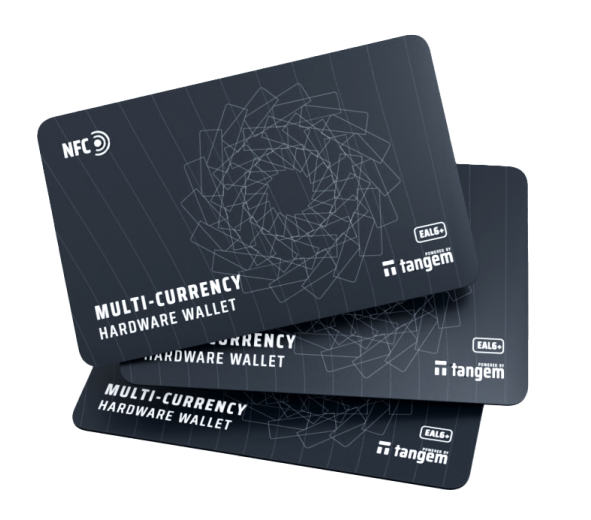
Here’s the thing about supply chain—it’s critical. You want a card from a reputable provider with a transparent manufacturing and verification process. OK, so yes, some brands are better than others. For practical users who want a reliable, card-based solution, I recommend checking the official documentation and user community reports before buying. One naturally strong option is the tangem hardware wallet for users wanting a tactile, mobile-first cold storage experience; I used one and it felt polished and straightforward.
Hmm… security models deserve nuance. Multi-signature setups remain the gold standard for organizations or families. A single smart card is perfect for personal cold storage but less ideal for enterprise custody without multi-sig. There are hybrid approaches: use cards as one key among several, or combine a card with a threshold signature scheme. These setups increase resilience against single-point failures and theft.
Seriously, backups confuse people. A backup strategy isn’t just about copying keys; it’s about survivability. Do you want your heir to find a passphrase in a safe-deposit box, or an elegant fallback that professional executors can access? You need a plan that balances privacy, accessibility, and legal realities. Trust me—it’s worth mapping out ahead of time.
Here’s the thing—usability will decide mainstream adoption. If smart card wallets require a PhD to manage, they won’t scale beyond early adopters. But when they hide complexity and make safety obvious, adoption follows. Developers who build clear mobile flows, recovery interfaces, and trustworthy onboarding will push cards into more wallets. I saw that happening in the last two years.
Whoa! A short note on interoperability. Not all smart cards support every coin or token. That’s a real limitation. Some cards handle popular chains well, while others are more focused or slow to add support for niche chains. If you hold a diverse portfolio, check compatibility before you buy—otherwise you’ll be juggling multiple solutions, which defeats the simplicity goal.
Really? One card, one life—it’s not always realistic. So plan for diversity but aim for consolidation where possible. For many users a single card covering BTC, ETH, and major ERC-20 tokens will suffice. For others, consider a combination: a primary card for frequent use and a secondary card in deep cold storage. I keep two cards for exactly that reason—yes, redundancy does cost more but it buys sleep.
Frequently Asked Questions
Are smart card wallets truly cold storage?
They can be. Because private keys stay inside a secure element and never leave, smart cards provide cold-like custody even when paired to a phone via NFC. However, their classification depends on your setup—if you expose the card to risky networks or copy keys elsewhere, you lose that advantage.
What happens if I lose my card?
Plan for that. Use recovery methods such as additional cards, a seed stored securely, or a social/recovery scheme. Many users keep a second card in a different location and a documented recovery process with trusted people—it’s basic redundancy, and believe me, it pays off when somethin’ goes sideways.